The Blind Person’s Allowance many eligible people never claim
Blind Person’s Allowance adds £3,250 to the tax-free allowance in 2026/27, but HMRC only gives it when asked. Who qualifies differs across the UK, and any unused part can go to a spouse or civil partner.
At a glance
- Blind Person’s Allowance adds £3,250 to the tax-free Personal Allowance in 2026/27, up from £3,130 in 2025/26. It is not given automatically: HMRC has to be asked.
- In England and Wales it needs registration with the council as blind or severely sight impaired. In Scotland and Northern Ireland the test is being unable to do work for which eyesight is essential.
- Any part a person cannot use can go to a husband, wife or civil partner, even if that partner is not blind.
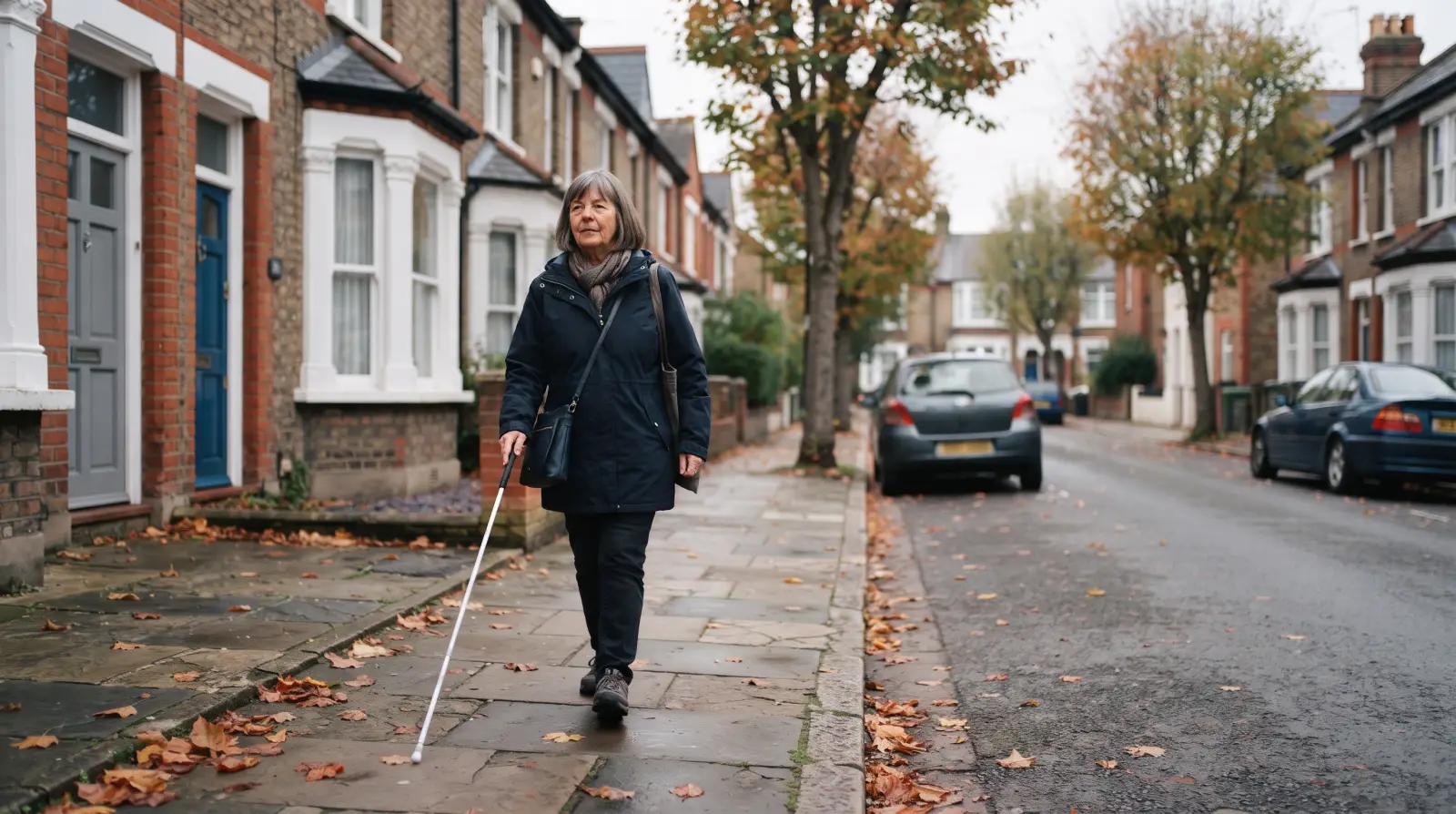
When Ruth’s eye consultant signed the certificate that led to her being registered as severely sight impaired, the weeks that followed were full of practical changes: a new phone set-up, a long cane assessment, rearranged shifts at work. Nobody mentioned tax. It was almost two years later that a friend asked whether she had claimed Blind Person’s Allowance, and she realised she had never heard of it.
That is a common story. The allowance is a straightforward addition to the tax-free amount, but HMRC only gives it once someone asks, and the people who qualify are often dealing with far more pressing things at the time.
What the allowance is
GOV.UK describes Blind Person’s Allowance as an extra amount of tax-free allowance, added to the yearly Personal Allowance. For the 2026/27 tax year, from 6 April 2026, it is £3,250. In 2025/26 it was £3,130 and in 2024/25 £3,070. Unlike the Personal Allowance, which is frozen, it is uprated: the 2026/27 figure was set by an indexation order made in 2026.
For a basic rate taxpayer in England, Wales or Northern Ireland, £3,250 of extra allowance means up to £650 less tax a year (20% of £3,250). For a higher rate taxpayer it can mean up to £1,300.
Who qualifies
The rules differ across the UK.
- England and Wales. Both conditions must apply: you are registered with your local council as blind or severely sight impaired, and you have a certificate saying so, or a similar document from your doctor. HMRC’s notes to form 575(T) add that no allowance is due for someone registered as partially sighted.
- Scotland and Northern Ireland. There is no register requirement. You can claim if you cannot do work for which eyesight is essential.
If both partners in a couple qualify, GOV.UK says each gets their own allowance.
What it is worth at different incomes
| Annual income | Tax without it | Tax with it | Difference |
|---|---|---|---|
| £10,000 | £0 | £0 | £0, all £3,250 unused |
| £14,000 | £286 | £0 | £286, £1,820 unused |
| £30,000 | £3,486 | £2,836 | £650 |
| £70,000 | £15,432 | £14,132 | £1,300 |
Assumes the standard £12,570 Personal Allowance, income that is all salary or similar non-savings income, and no other allowances or reliefs. Scottish rates differ. Unused amounts may be transferable to a spouse or civil partner. Illustrative only.
The allowance is a straightforward addition to the tax-free amount, but HMRC only gives it once someone asks.
Passing the unused part to a partner
Where a person’s income is too low to use all of the allowance, the surplus can be transferred to a husband, wife or civil partner. GOV.UK says this can be done whether or not the partner is blind. The couple normally need to be living together, but a transfer is still possible when they live apart because of illness (for example, a partner in residential care), working away from home, an armed forces posting, prison, or training or education.
The transfer is made on form 575 or by phoning HMRC, and the same process offers the option to transfer any Married Couple’s Allowance.
Worked example · illustrative only
A couple where only one partner can use it
Ruth, in England, is registered as severely sight impaired and has income of £8,000 a year. Her husband Mark earns £30,000 and pays basic rate tax. Neither has other income. The figures are invented.
- Ruth’s income
- £8,000
- Covered by her own Personal Allowance
- all of it
- Blind Person’s Allowance she cannot use
- £3,250
- Reduction in Mark’s tax after a transfer (20% of £3,250)
- £650
The couple might also look at the Marriage Allowance, a separate claim covered below.
How far back a claim can go
HMRC’s notes say you can claim from the first year you are registered, and also for the previous tax year if you have evidence from that year, usually the eye specialist’s certificate. The Income Tax Act 2007 treats someone who registered in one year on evidence obtained in the year before as qualifying for the whole of that earlier year.
For years before that, HMRC’s general time limit for claims by individuals is four years after the end of the tax year concerned, and the transfer to a partner has its own four-year limit. Someone who was registered for several years without claiming can ask HMRC which years are still open.
How to claim
GOV.UK says to contact HMRC, on 0300 200 3301, Monday to Friday, 8am to 6pm. In England and Wales, HMRC’s notes say to give the name of the local council, the date of registration and a copy of the certificate. In Scotland and Northern Ireland, you send confirmation that you cannot do work for which eyesight is essential. Claiming is free; firms that claim for a cut of any refund add nothing the official route does not already provide.
For employees, the allowance usually shows up as a higher number in the tax code: 1257L would typically become 1582L. Our guide to what the letters and numbers in your tax code mean explains how to check.
Where the Marriage Allowance fits
GOV.UK does not say anything about combining the two allowances. The legislation behind the Marriage Allowance rules it out where either partner claims Married Couple’s Allowance, but does not list Blind Person’s Allowance as a bar. A couple like Ruth and Mark may therefore want to check the conditions in our guide to the Marriage Allowance as well, and ask HMRC to confirm how both apply when they call.
Who this matters for, and what to check
- Anyone in England or Wales registered with their council as blind or severely sight impaired who has not told HMRC.
- People in Scotland or Northern Ireland whose sight means they cannot do work for which eyesight is essential.
- Couples where the person who qualifies has too little income to use the allowance.
- Anyone whose tax code still shows 1257L despite qualifying.
In short
Blind Person’s Allowance adds £3,250 of tax-free income in 2026/27, can be passed to a partner who is not blind, and can reach back at least one tax year. It is one phone call to HMRC, and the evidence needed is usually paperwork the person already holds.
Sources
- GOV.UK, Blind Person’s Allowance. Amounts for 2026/27 and 2025/26, eligibility, how to claim and transfer to a partner
- HMRC, Notes for completing form 575(T). Evidence to send, claiming for the previous year, partially sighted exclusion, transfer to a partner who is not blind
- GOV.UK, Income Tax rates and allowances: current and past. Blind Person’s Allowance for 2026/27 and earlier years
- legislation.gov.uk, Income Tax Act 2007, section 38. The qualifying conditions and the rule for the preceding tax year
General information
This article is private sponsored information from N&V Accounting OÜ, the publisher of Mo-saique (company details). It is not published by, and is not affiliated with, HM Revenue & Customs (HMRC) or GOV.UK. It is general information, not personal tax or financial advice, and it does not recommend any product or provider.
Figures are official published rates for the year stated or clearly labelled illustrations; what any one person pays or can claim depends on their own income and circumstances. This site takes no applications and charges no fees. Never give your National Insurance number, bank details or Government Gateway or GOV.UK One Login details to a website in response to an article. For your own position, use GOV.UK or contact HMRC or your council directly.
The Tuesday Tide, every Tuesday
One page each Tuesday: what has changed in tax allowances, rates and household deadlines, with the official source for each. Nothing to buy.
Free. We email a confirmation link first, and you can unsubscribe at any time.