Advertisement · Sponsored content by N&V Accounting OÜ
This tax allowance could benefit British couples: what to check before claiming
Some married couples and civil partners may be able to reduce their Income Tax through a relief that is easy to overlook. HMRC’s Marriage Allowance can lower an eligible couple’s tax by up to £252 in a tax year, and qualifying claims can sometimes be backdated. Whether it helps depends on both partners’ income and tax position.
When a couple shares a home, it is natural to think of household finances together. Income Tax, however, is usually calculated for each person separately. That difference is the reason an established HMRC allowance can matter: one partner might not need all of their tax-free allowance while the other is paying basic-rate tax.
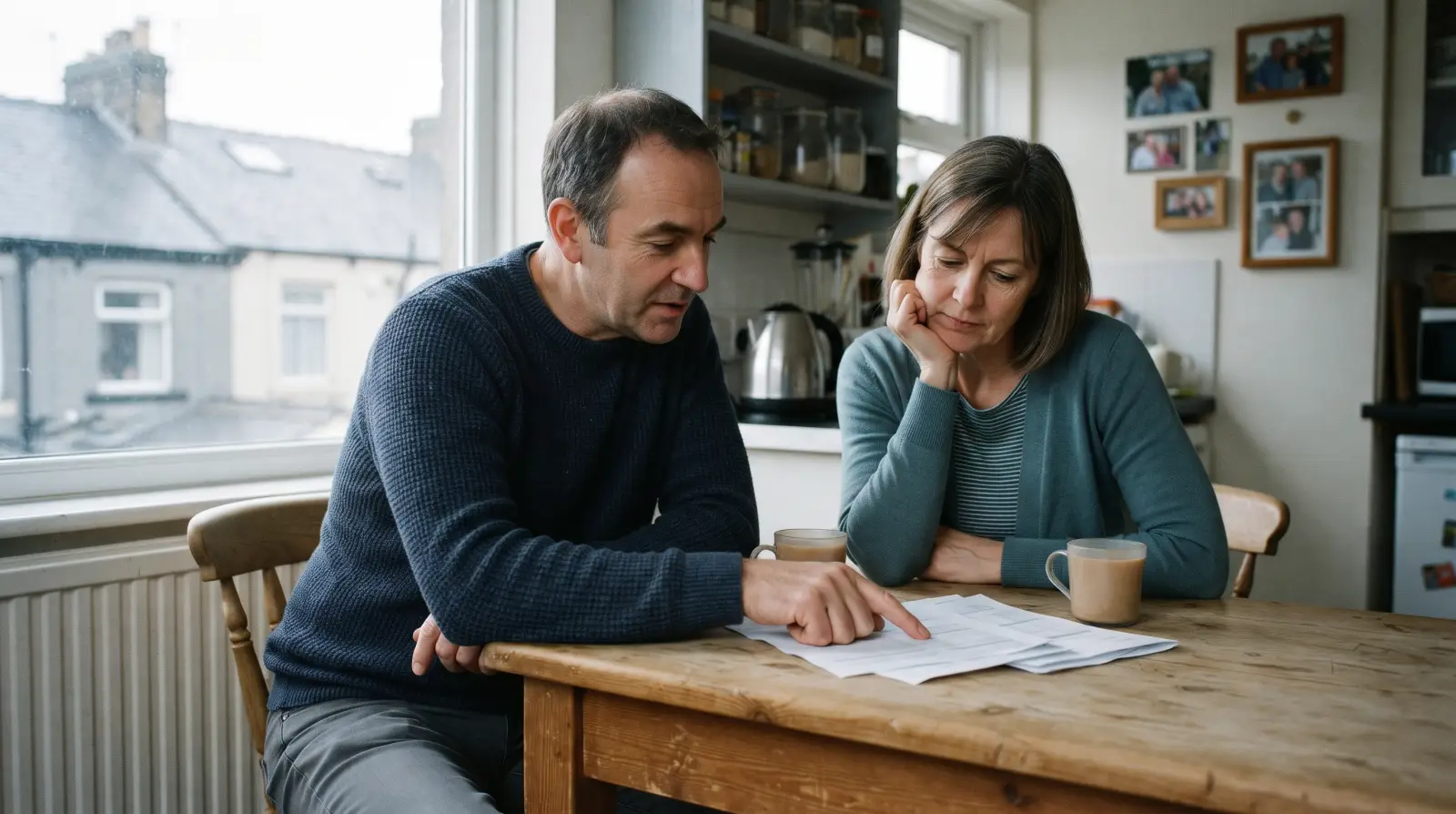
The measure is called Marriage Allowance. It is not a new government payment, and it is not available simply because two people live together. Under the current rules, an eligible person can transfer £1,260 of their Personal Allowance to their husband, wife or civil partner. That transfer can reduce the receiving partner’s Income Tax by up to £252 for the tax year.
There is also a point worth investigating for people who were eligible in earlier years. HMRC allows some claims to be backdated, meaning the benefit is not always limited to the current tax year.
Why one partner’s unused tax allowance matters
For 2026/27, the standard Personal Allowance is normally £12,570. It represents an amount of income that someone can generally receive before paying Income Tax. If one person in a marriage or civil partnership has income beneath that threshold, they may have some unused allowance.
Marriage Allowance lets the lower earner transfer a fixed part of their allowance to the other partner, provided the relevant criteria are met. The lower earner does not physically transfer money; HMRC adjusts the partners’ tax treatment.
The receiving partner’s bill can fall because £1,260 of allowance is valued at the applicable basic-rate tax relief. At 20%, that is £252. But the couple’s actual net saving may be less if the transferring partner then becomes liable for some Income Tax. That’s why it is important to consider both incomes together rather than look at the headline figure alone.
A worked example shows the difference
Suppose one partner has annual income of £11,500 and the other has income of £20,000, using the ordinary England, Wales or Northern Ireland rules and ignoring unrelated reliefs for illustration.
Before a claim, the lower earner pays no Income Tax because their income is below the normal £12,570 Personal Allowance. The other partner pays tax above their own allowance.
If £1,260 is transferred, the lower earner’s allowance becomes £11,310. Their £11,500 income is now £190 above that reduced allowance, so they may incur a small tax charge. Meanwhile, the receiving partner gets relief from transferring £1,260. The result is a net household saving of £214 in HMRC’s published example — not the full £252.
This demonstrates why “up to” matters. A couple might obtain the maximum relief, a smaller amount, or no benefit at all depending on their circumstances.
A couple might obtain the maximum relief, a smaller amount, or no benefit at all depending on their circumstances.
Which couples can qualify?
The basic conditions are more specific than simply being married. One partner normally needs to have income below their Personal Allowance or pay no Income Tax, while the other partner must usually be a basic-rate Income Tax payer. The couple must be married or in a registered civil partnership.
For England, Wales and Northern Ireland, HMRC generally describes the receiving partner’s ordinary eligible income range as about £12,571 to £50,270. In Scotland, the receiving partner can qualify if taxed at a starter, basic or intermediate rate under the relevant Scottish rules, with different income boundaries.
Those ranges are general guides, not comprehensive tests for people with complex taxable income. Savings interest, dividends, work benefits or varying earnings may change the answer. Someone with uncertain income should use the official HMRC calculation or seek tax advice.
Couples who live together without being married or registered civil partners do not qualify through this allowance. Nor does the arrangement allow both partners to transfer the same allowance to each other.

Why age can affect which allowance is better
Marriage Allowance is relevant to many households in their fifties, sixties and beyond, but there is an important distinction for the oldest age group. Where one spouse or civil partner was born before 6 April 1935, the separate Married Couple’s Allowance may provide a different kind of tax reduction and could be more advantageous.
It is not possible to claim Marriage Allowance and Married Couple’s Allowance at the same time. HMRC recommends checking which allowance applies rather than assuming the younger-couple relief is best for everybody.
The eligibility test is about dates of birth, income and marriage or civil-partnership status, not simply whether either partner works full time.
The part many couples may not have checked: earlier tax years
A person who discovers Marriage Allowance now may wonder whether previous qualifying years can be considered. HMRC currently allows claims to be backdated to 6 April 2022, covering the 2022/23 tax year onwards when the relevant conditions were met.
Each tax year is assessed on its own facts. A couple that qualified in one year might not have qualified in the next if their incomes changed. A backdated claim therefore cannot be treated as four guaranteed cheques of £252, and the precise amount is subject to HMRC’s calculation.
It also matters who makes the claim. Normally the lower-income partner applies to transfer the allowance. Applications are made through HMRC, with special routes for people using Self Assessment or asking for backdating.
There is no need to enter tax or banking details on the publisher’s website to check whether HMRC has an existing relief.
How the saving is applied
When an application is successful, HMRC can make the adjustment through the partners’ tax codes or through Self Assessment, depending on the circumstances. The receiving partner’s tax code may end with M, while the transferring partner’s tax code may end with N.
For ongoing eligible couples, the transfer can continue in later tax years unless it is cancelled, so changes in income should be kept under review. A new job, a change in hours or an increase in taxable income could alter whether the transfer remains beneficial.
That means this is not necessarily a one-off decision. Even after an allowance is granted, the household should understand what tax codes and annual return figures represent.

Where to verify the details
HMRC provides the official rules, online calculator and application information free of charge through GOV.UK. Couples with only straightforward employment income may find the eligibility check relatively simple. Where either person has multiple income types or unusual allowances, HMRC’s Income Tax helpline or an authorised tax adviser can clarify the position.
The important financial opportunity is a potential reduction in Income Tax, not a fresh government payment that has been created for married people. It can be worth checking, especially when household earnings differ, but the answer depends on the numbers for both partners and on the specific tax year.
Official sources
- HMRC — Marriage Allowance: How it works
- HMRC — Marriage Allowance: How to apply
- HMRC — Married Couple’s Allowance: Eligibility
- HMRC — Income Tax rates and allowances
Independent sponsored information, not an HMRC or UK government service. No allowance is guaranteed by reading this article. Eligibility, the value of any relief and backdated years are determined using the official rules.
General information
This article is private sponsored information from N&V Accounting OÜ, the publisher of Mo-saique (company details). It is not published by, and is not affiliated with, HM Revenue & Customs (HMRC) or GOV.UK. It is general information, not personal tax or financial advice, and it does not recommend any product or provider.
Figures are official published rates for the year stated or clearly labelled illustrations; what any one person pays or can claim depends on their own income and circumstances. This site takes no applications and charges no fees. Never give your National Insurance number, bank details or Government Gateway or GOV.UK One Login details to a website in response to an article. For your own position, use GOV.UK or contact HMRC or your council directly.
The Tuesday Tide, every Tuesday
One page each Tuesday: what has changed in tax allowances, rates and household deadlines, with the official source for each. Nothing to buy.
Free. We email a confirmation link first, and you can unsubscribe at any time.